
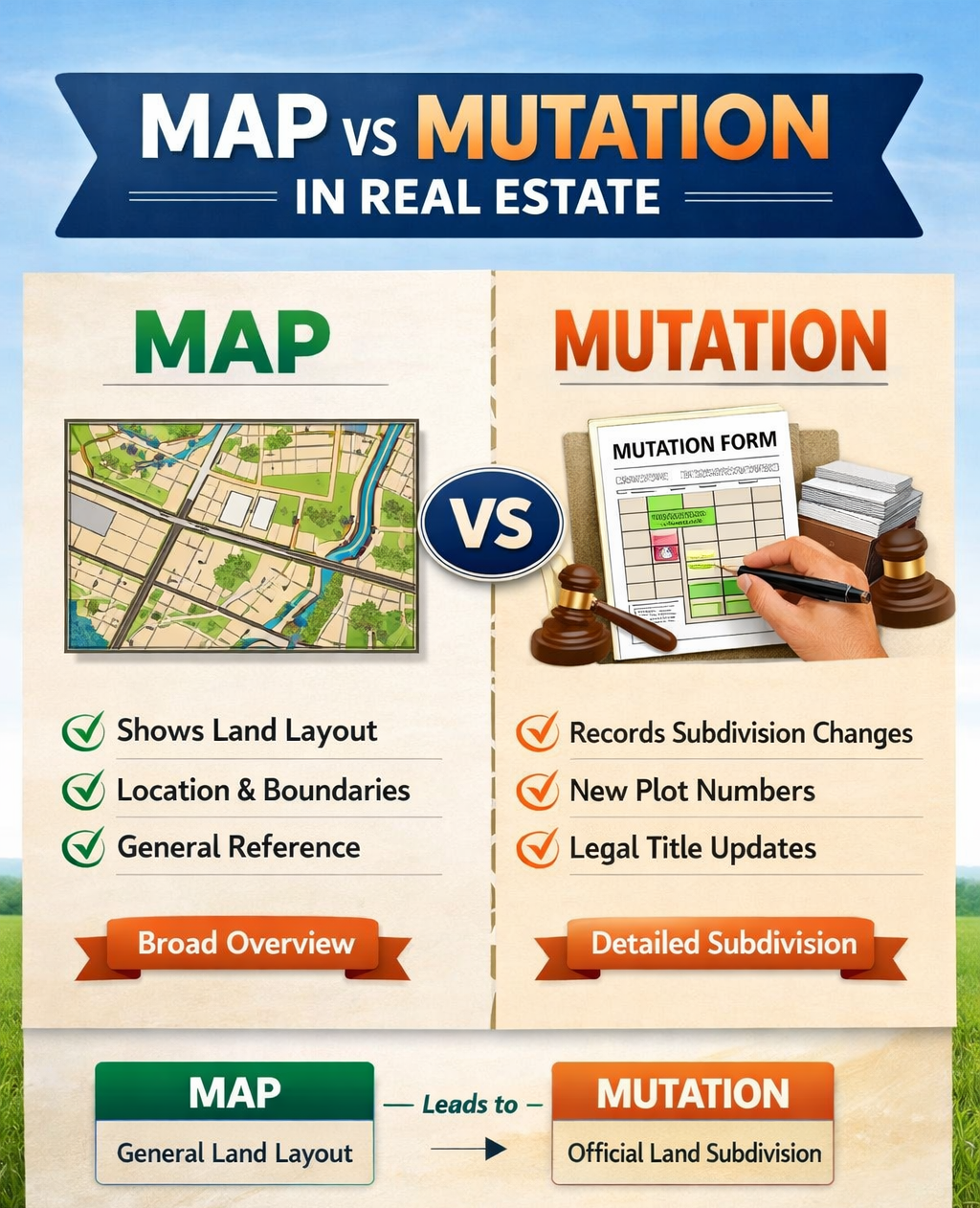
In Kenya’s real estate industry, especially when dealing with land buying, subdivision, or development, two terms often confuse buyers and even first-time investors: a map and a mutation.
At Think Real Estate, we believe that an informed investor is a protected investor. Understanding these two concepts is essential because they directly affect ownership, subdivision, and issuance of title deeds.
This guide explains the difference in depth, their roles in land transactions, and why they matter when investing in real estate in Kenya.
What is a Map in Real Estate?
In real estate, a map refers to the official land survey plan that shows the general layout of a piece of land or an area. It is prepared by licensed surveyors and approved by the government survey department.
Types of Maps in Land Matters
- Registry Index Map (RIM) – Used mainly in rural areas
- Cadastral Map – Used in urban and planned areas
- Survey Plan Map – Detailed drawing showing boundaries and measurements
What a Map Shows
- Location of a parcel of land
- Boundaries of large areas
- Roads, rivers, and public utilities
- General layout of plots in a region
- Parcel numbers (but not detailed subdivisions)
Purpose of a Map
- Helps identify land location
- Used in initial land search and verification
- Guides planners and surveyors before subdivision
- Acts as a reference for ownership records
👉 In simple terms:
A map shows where land is and how it is generally arranged. It does NOT show detailed subdivision changes.
What is a Mutation in Real Estate?
A mutation is a legal survey document used when land is subdivided or combined. It officially records changes made to land parcels and is submitted to the government for approval.
What a Mutation Shows
- Division of one parcel into multiple smaller plots
- Combination (amalgamation) of several parcels into one
- New parcel numbers created after subdivision
- Exact measurements of each new plot
- Updated ownership structure for registration
Purpose of a Mutation
- To legally update land records after subdivision
- To support issuance of individual title deeds
- To ensure government records reflect actual ground changes
- To prevent disputes after land is divided
👉 In simple terms:
A mutation is the legal process that confirms land has been changed (subdivided or merged).
Key Difference Between Map and Mutation
| Feature | Map | Mutation |
|---|---|---|
| Purpose | Shows general land layout | Records legal changes in land parcels |
| Use stage | Before or during planning | After subdivision or amalgamation |
| Detail level | Broad and general | Highly detailed and specific |
| Legal effect | Informational reference | Legal document for title changes |
| Output | Land plan/map sheet | Mutation form & updated survey records |
| Role in title deed | No direct effect | Used to issue new title deeds |
How Map and Mutation Work Together in Land Subdivision
In real estate development, especially in projects handled by companies like Think Real Estate, both documents work hand in hand:
Step 1: Planning Using a Map
Surveyors use the map to understand the land layout, access roads, and suitability for subdivision.
Step 2: Designing the Subdivision
Planners create a proposed layout based on the map, deciding plot sizes, roads, and amenities.
Step 3: Mutation Process
Once approved, the land is officially subdivided through a mutation process, updating government records.
Step 4: Issuance of New Titles
After mutation approval, each new plot is issued a separate title deed.
Why Understanding This Matters to Investors
Many land buyers in Kenya lose money or fall into disputes because they do not understand these documents. Knowing the difference helps you:
- Avoid buying illegally subdivided land
- Confirm if plots are officially registered
- Understand if titles are ready or still processing
- Detect fraud or fake subdivision claims
- Make informed investment decisions
At Think Real Estate, all our projects undergo proper mapping, approved subdivision plans, and legally processed mutations before clients receive titles.
How Think Real Estate Handles Maps and Mutations
In our developments such as:
- Makutano Ridge Phase 2
- Naivasha Breeze Phases 1–4
- Zawadi Gardens Phase 1- 2
- Eden Gardens Projects
We ensure:
✔ Licensed surveyors prepare official maps
✔ County approvals are obtained before subdivision
✔ Mutation forms are processed legally and transparently
✔ Clients receive clean, ready-to-transfer title deeds
✔ No hidden or unapproved land changes
This guarantees that every investor gets secure, verifiable, and legally recognized property ownership.
Common Mistakes Buyers Should Avoid
❌ Confusing a map with ownership
A map does NOT prove ownership—it only shows layout.
❌ Buying land before mutation approval
If mutation is not approved, the subdivision is NOT legally recognized.
❌ Ignoring survey documents
Survey plans and mutation forms are essential for verifying authenticity.
❌ Trusting verbal subdivision promises
Always demand official documents and approvals.
Conclusion
The difference between a map and a mutation is fundamental in real estate investment in Kenya.
- A map shows the layout and location of land
- A mutation legally records changes in land ownership or subdivision
Together, they form the backbone of land planning, subdivision, and title issuance.
At Think Real Estate, we ensure every project follows proper mapping, legal mutation processes, and government approvals so that investors enjoy secure, transparent, and profitable land ownership experiences.
📞 Call/WhatsApp: 0791 000 222 | 0792 000 222
🌐 Website: www.thinkrealestatekenya.co.ke
📅 Site Visits: Every Wednesday & Saturday